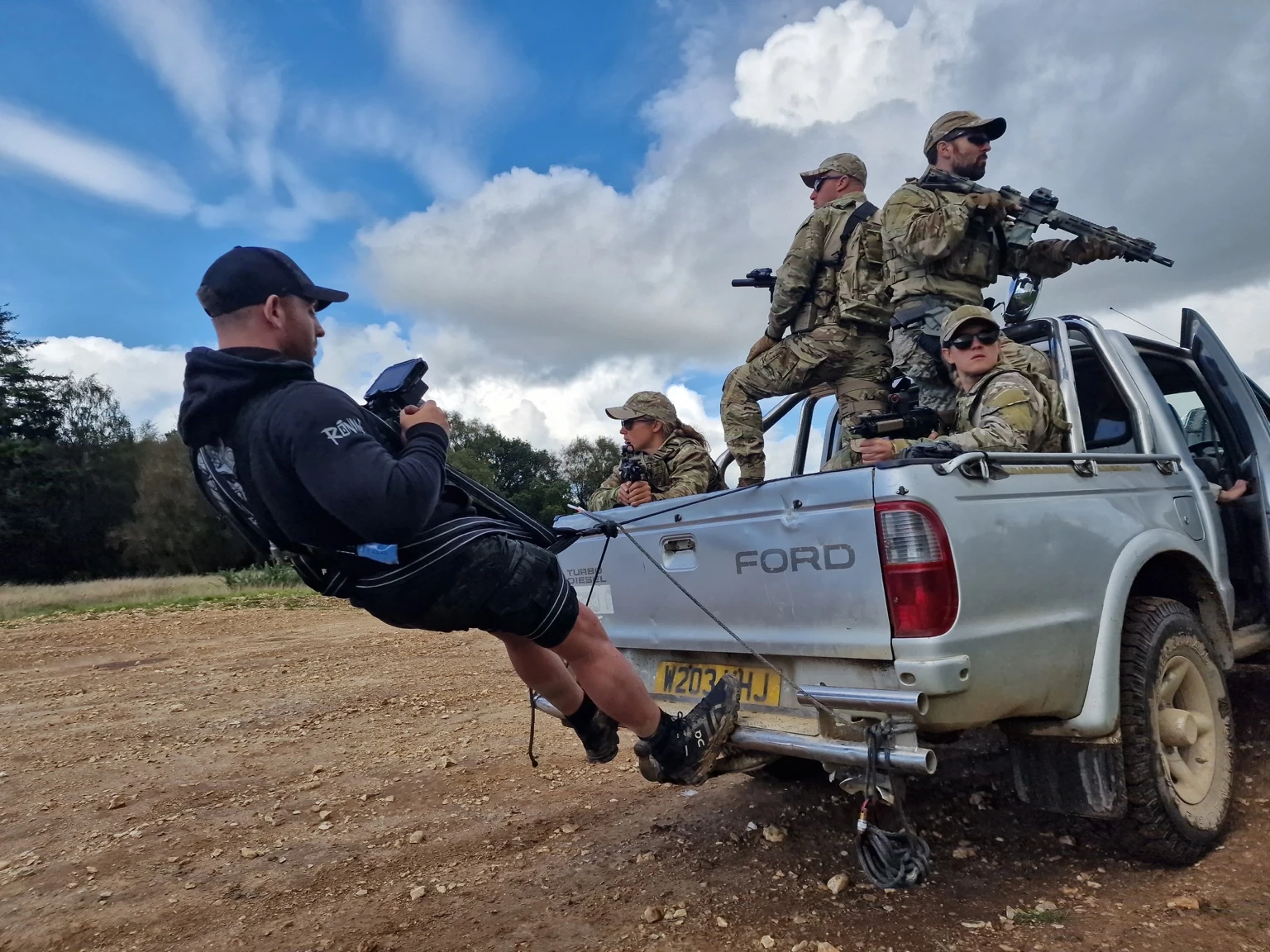
A physical sequence belongs to the same story as the scenes around it. As a director, you need a shared understanding with the stunt coordinator of what changes for the character and what the audience must experience.
Their responsibilities are distinct, but the conversation should be connected. Creative intention, specialist assessment and the camera plan influence one another; treating them as unrelated stages can create avoidable conflicts.
Agree the dramatic purpose first
Begin with the scene’s place in the film. Does a relationship change? Does someone discover a limit? Is the audience meant to feel uncertainty, relief or a growing loss of control?
The coordinator can develop proposals around that intention. A sequence driven by a character’s hesitation has a different rhythm from one built around confidence. Clear dramatic priorities give the team a basis for comparing possible approaches.
Bring camera into the development
The camera determines what the audience sees and understands. It also affects the relationship between performers, space and the planned action. The director, cinematographer and coordinator should discuss those relationships together.
Boards, previs and rehearsal can support the exchange where useful. Their purpose is to make assumptions visible, identify missing moments and help the production agree an approach. They do not replace the assessment needed for the actual shoot.
Keep responsibilities and changes clear
Confirm who owns creative decisions, who coordinates specialist requirements and how updates reach the affected departments. A change to blocking or coverage should be discussed through the agreed route rather than added informally on the day.
Where one person takes on more than one role, the production still needs explicit responsibilities and adequate support. Combining experience can be valuable, but a combined credit does not remove the work or oversight each role requires.
Collaboration questions answered
Should action design begin after the shot list is finished?
It is often more useful to develop them together. The director supplies intention and priorities; specialist input helps the camera plan and sequence evolve around a workable approach.
Can the coordinator suggest story changes?
They can contribute ideas through the creative discussion. Any revision should preserve the director’s agreed intention and be reviewed for its effect on the surrounding film.
How should I explain experience across both roles?
Explain your actual contribution in each capacity and the relevance to this project. Discuss the intended scope and the support each responsibility would require. Experience across roles is useful when its implications are clear.
Build the sequence into the film
My work spans film directing and stunt coordination and action design. Discuss your project to explore which role or collaboration best fits its needs.