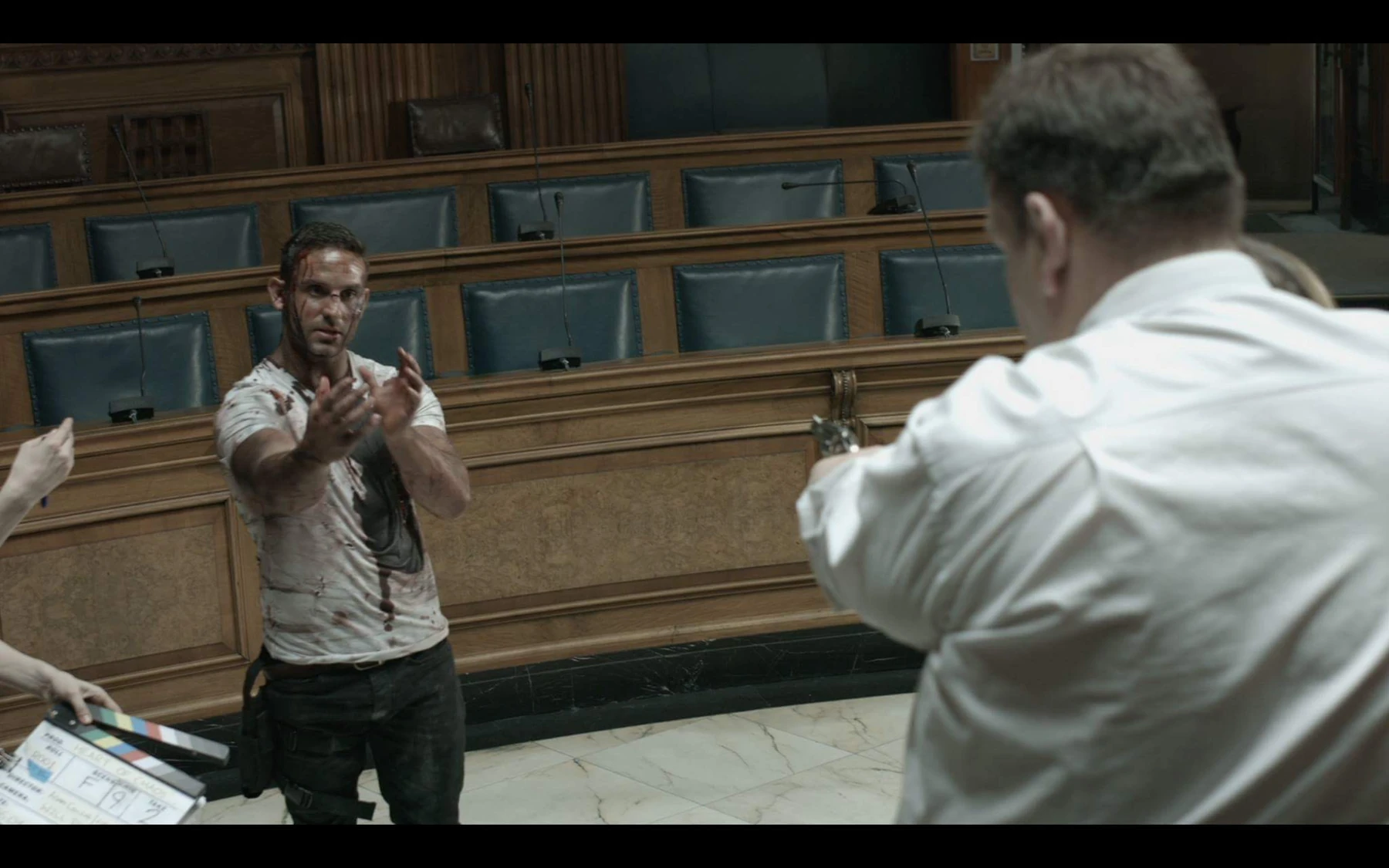
A physical scene still depends on what the character wants, understands and feels. As a director, you need to communicate that intention while working with the specialists responsible for the sequence’s practical requirements.
Preparation can help an actor stay present within those demands. The useful starting point is a shared understanding of the performance, followed by appropriate assessment and planning through the production team.
Define the character before discussing the action
Consider the person’s experience, temperament and emotional state. Someone acting reluctantly will read differently from someone who feels entirely in control. The physical behaviour should belong to that character.
Discuss those qualities with the actor and coordinator. Clear dramatic context helps everyone work towards the same scene, rather than developing a technically accomplished sequence with little connection to the person performing it.
Prepare questions for the specialist conversation
Identify what you need the audience to see and understand, then discuss what that may require. Share relevant script context, visual ideas and anything that is still provisional.
Do not infer a performer’s suitability from enthusiasm or general fitness. Let the relevant professionals assess the specific demands and establish appropriate preparation. Your contribution is to keep the performance intention clear as the plan develops.
Make rehearsal useful to the scene
Discuss what a rehearsal needs to resolve: a character transition, the relationship between performers, timing or the connection with camera. Coordinate those aims with the preparation established by the responsible specialists.
If blocking, costume, location or coverage changes afterwards, raise the change through the agreed route. The actor needs a coherent approach, and the affected departments need the opportunity to review its implications.
Questions directors may ask
How do I give an actor room to explore?
Be clear about intention and about the boundaries established for the sequence. Discuss where interpretation is welcome and which elements depend on an agreed specialist plan. Exploration and clarity can support one another.
What should I ask about preparation time?
Ask what assessment and preparation the sequence needs, who should be involved and which decisions must be made first. Bring that information into the discussion with the producer rather than assuming it can happen around the shoot.
How do doubles and cast connect in the finished scene?
Discuss the coverage and performance continuity with the relevant team. The audience’s experience should remain coherent across the material, with specialist requirements respected throughout.
Keep the person at the centre
Physical detail becomes convincing when it serves the character and the story. My background includes filmmaking and military service, alongside coordination, tactical advice and cast preparation. Get in touch about a directing opportunity or collaboration.